Respect human dignity on social media, Bishop Hiiboro tells digital users
Warning: Undefined array key 0 in /home2/cityrevi/public_html/wp-content/themes/_city/single.php on line 65
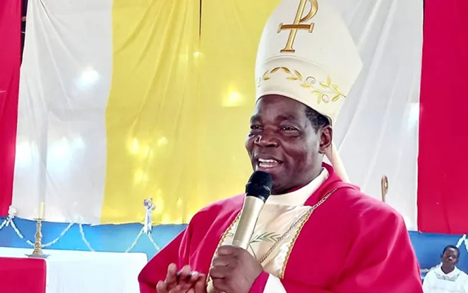
The Bishop’s remarks come amid a surge in graphic images circulating across platforms such as Facebook, WhatsApp, and TikTok, often depicting accident victims, sick patients, violent incidents, or deceased individuals shared without consent
By Emmanuel Mandella
The Catholic Bishop of Tombura-Yambio Diocese, His Lordship Edduardo Hiiboro Kussala has issued a strong moral warning over the growing misuse of social media, particularly by young people.
He cautioned that irresponsible online behavior is eroding human dignity, spreading trauma, and undermining societal values.
In a pastoral statement released this week, Bishop Hiiboro delivered a firm message urging the public to uphold respect, compassion, and restraint in digital communication, especially when sharing images related to death, illness, or human suffering.
The Bishop’s remarks come amid a surge in graphic images circulating across platforms such as Facebook, WhatsApp, and TikTok, often depicting accident victims, sick patients, violent incidents, or deceased individuals shared without consent and with little regard for privacy or cultural norms.
“With humility and respect, I wish to offer a word of moral and pastoral guidance, it is neither helpful nor respectful to post images of human beings in frightening, degrading, or disturbing conditions on public platforms,” Bishop Hiiboro stated.
South Sudan has witnessed a rapid expansion in mobile phone usage and internet access over the past decade, with young people forming the largest and most active group on social media. While these platforms have provided space for expression, activism, and information-sharing, religious leaders and social observers warn they have also become channels for harmful content.
In recent months, graphic images of road accidents, disease outbreaks, communal violence, and even hospital patients have been widely shared online, sometimes before families are informed, and often without any ethical consideration.
Bishop Hiiboro cautioned that such practices not only violate personal dignity but also inflict emotional harm on families and communities.
“Even in the case of death, it is more dignified to share information through words or, where necessary, to post an image of the deceased laid peacefully in a coffin, if there is a compelling reason to share a photograph, it should honor the person as they were in life,” he said.
The cleric further condemned the public display of individuals’ health conditions, warning that sharing images of sick or suffering people without consent crosses moral and ethical boundaries.
“The health conditions, suffering, or medical status of individuals should not be displayed publicly, such matters belong to the private sphere and require discretion, consent, and compassion,” he said.
This message resonates strongly in a country grappling with health crises, insecurity, and humanitarian challenges, where images from hospitals or conflict-affected areas often circulate online with little context.
At the heart of the Bishop’s message is the principle that human dignity is inviolable, regardless of a person’s condition or circumstance.
“Every human person possesses inherent dignity whether alive, sick, suffering, or deceased, our communication must safeguard this dignity and avoid causing fear, trauma, or unnecessary distress,” Bishop Hiiboro emphasized.
Church leaders say the statement is not meant to silence public discourse, but to guide it toward responsibility and humanity in an era where images travel faster than truth.
In a call for responsible communication, the Bishop encouraged South Sudanese, especially the youth, to reflect before posting content online and to recognize the power and consequences of digital communication.
“Respectful words, silence when needed, prayer, and accurate information often speak louder and more powerfully than disturbing images,” he said.
The Bishop’s intervention has sparked debate across social and religious circles, with many welcoming the message as timely and necessary. Some youth leaders acknowledge that while social media gives young people a voice, it also demands responsibility.
Many note that the misuse of social media has, in some cases, fueled panic, misinformation, and social tension, particularly during emergencies or sensitive events.
As South Sudan continues to navigate peace building, healing, and national cohesion, religious leaders say respect for human dignity both offline and online must remain a shared value.
Bishop Hiiboro’s message stands as a moral challenge to individuals, media practitioners, and institutions alike to rethink how stories are told in the digital age.
“Let us choose responsible communication, our society will be judged not only by what we say, but by how we treat one another even on our screens,” he urged.