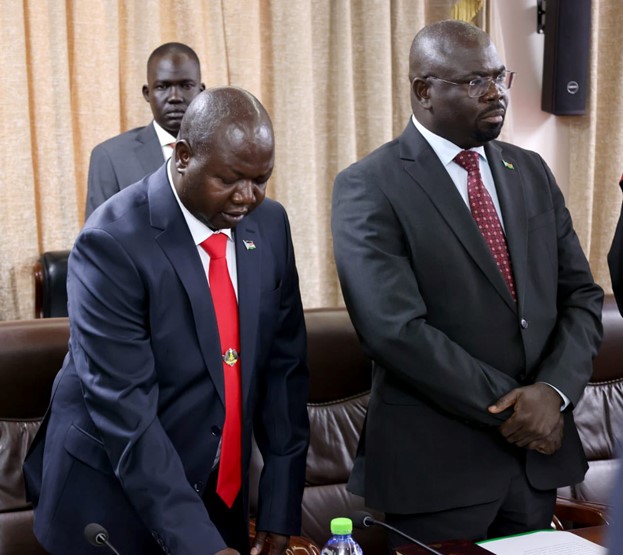
Norwegian Church aid launches agricultural programme to empower women, youth
Warning: Undefined array key 0 in /home2/cityrevi/public_html/wp-content/themes/_city/single.php on line 65
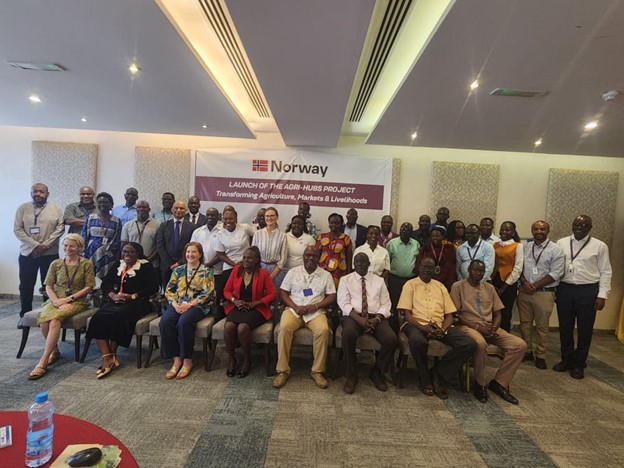
The Agri Hub programme aims to address wide gaps by supporting 125 producer groups and five cooperatives across Lakes, Jonglei, and Western Bahr el Ghazal states, reaching more than 6,150 women, men, and youth
By Emmanuel Mandella
In an effort to tackle food insecurity in the country, the Norwegian Church Aid (NCA) has launched a multi-partner agriculture programme designed to shift rural communities from subsistence farming to a resilient, market-driven agricultural system, as part of its women and youth empowerment.
The programme, dubbed Agri Hub Initiative, was officially launched on Wednesday and will run until November 2026, with a total budget of 28.2 million Norwegian kroner, approximately 2.9 million US dollars. It is funded by the Royal Norwegian Embassy and implemented through a consortium led by NCA in partnership with Catholic Relief Services (CRS), CARE, Johanniter, and IWIN.
Speaking at the launch, Cathrin Seland, the incoming NCA Country Director, said the initiative responds to long-standing structural challenges within South Sudan’s agricultural sector, where low productivity, weak market access, and limited financial services continue to undermine food security.
“Food insecurity in South Sudan is not only a production challenge; it is a systems challenge, our experience shows that farmers perform better when production, markets, and finance are addressed together,” Seland said.
According to NCA, more than 7 million people in South Sudan are currently food insecure, while cereal production remains far below national demand. Less than 10 percent of rural households have access to credit, and nearly half of communities live more than five kilometers from a functioning market, limiting opportunities for farmers to sell surplus produce.
The Agri Hub programme aims to address these gaps by supporting 125 producer groups and five cooperatives across Lakes, Jonglei, and Western Bahr el Ghazal states, reaching more than 6,150 women, men, and youth. The initiative seeks to move farmers beyond survival-level production toward commercial agriculture, enabling them to generate income and withstand economic and climate shocks.
Under the programme, farmers will receive training in climate-adapted agricultural practices, improved access to quality inputs, better storage facilities, and support to increase production of key commodities including sorghum, groundnuts, and fish. Market access will be strengthened through aggregation centres, quality standards, and linkages to buyers, allowing smallholder farmers to participate more effectively in local and regional markets.
A core pillar of the initiative is financial inclusion, which aims to unlock farmers’ ability to invest in their enterprises. NCA and its partners plan to work with financial service providers to improve savings mechanisms, financial literacy, and access to credit, particularly for groups traditionally excluded from formal finance.
Women and youth have been placed at the center of the programme’s design. Seland said targeted interventions will help address structural inequalities that limit their participation in the agricultural economy.
“Women and youth will receive focused training, leadership opportunities, and financial inclusion support to strengthen their economic resilience and power in decision-making,” she said.
She added that empowering these groups is essential not only for food security, but also for social stability and long-term development.
At the launch, Dr. Tapfuma Murove, Country Director for Catholic Relief Services, said the consortium is committed to supporting a transition from emergency food aid to sustainable, locally driven solutions.
“This programme aims to enhance food production, improve access to markets and finance, and foster the economic resilience of women and youth. We are deeply aware of the challenges facing farmers, including climate shocks and unpredictable weather, and the urgent need for long-term solutions,” Dr. Murove said.
He praised the Norwegian government for supporting market-based approaches that prioritize dignity and self-reliance.
“Through our livelihoods, markets, agriculture, and climate strategy, we are dedicated to building resilient food systems grounded in regenerative agriculture and inclusive finance,” he added.
The initiative has also received strong backing from the Government of South Sudan. Peter Anyieth Mayen, Director for Cooperatives at the Ministry of Agriculture and Food Security, said the government views cooperative farming as a key pathway to agricultural transformation.
“We have registered over 5,000 cooperatives with more than 58,000 members. But many smallholder farmers still lack capacity. We need our development partners to help build skills, improve financial record-keeping, and strengthen these cooperatives,” Mayen said.
He emphasized that South Sudanese communities are increasingly seeking to move away from dependency on food aid and toward self-sufficiency.
NCA said the Agri Hub programme is designed to leave behind community-owned agricultural hubs that will continue supporting production, trade, and economic growth beyond the project’s lifespan, contributing to a more inclusive and resilient rural economy.
As South Sudan faces mounting pressures from climate change, conflict, and economic instability, the success of the initiative will be closely watched as a potential model for transforming agriculture and empowering the country’s next generation of farmers.
Utilities
“We have registered over 5,000 cooperatives with more than 58,000 members. But many smallholder farmers still lack capacity. We need our development partners to help build skills, improve financial record-keeping, and strengthen these cooperatives,” said Peter Anyieth Mayen, Director for Cooperatives at the Ministry of Agriculture.