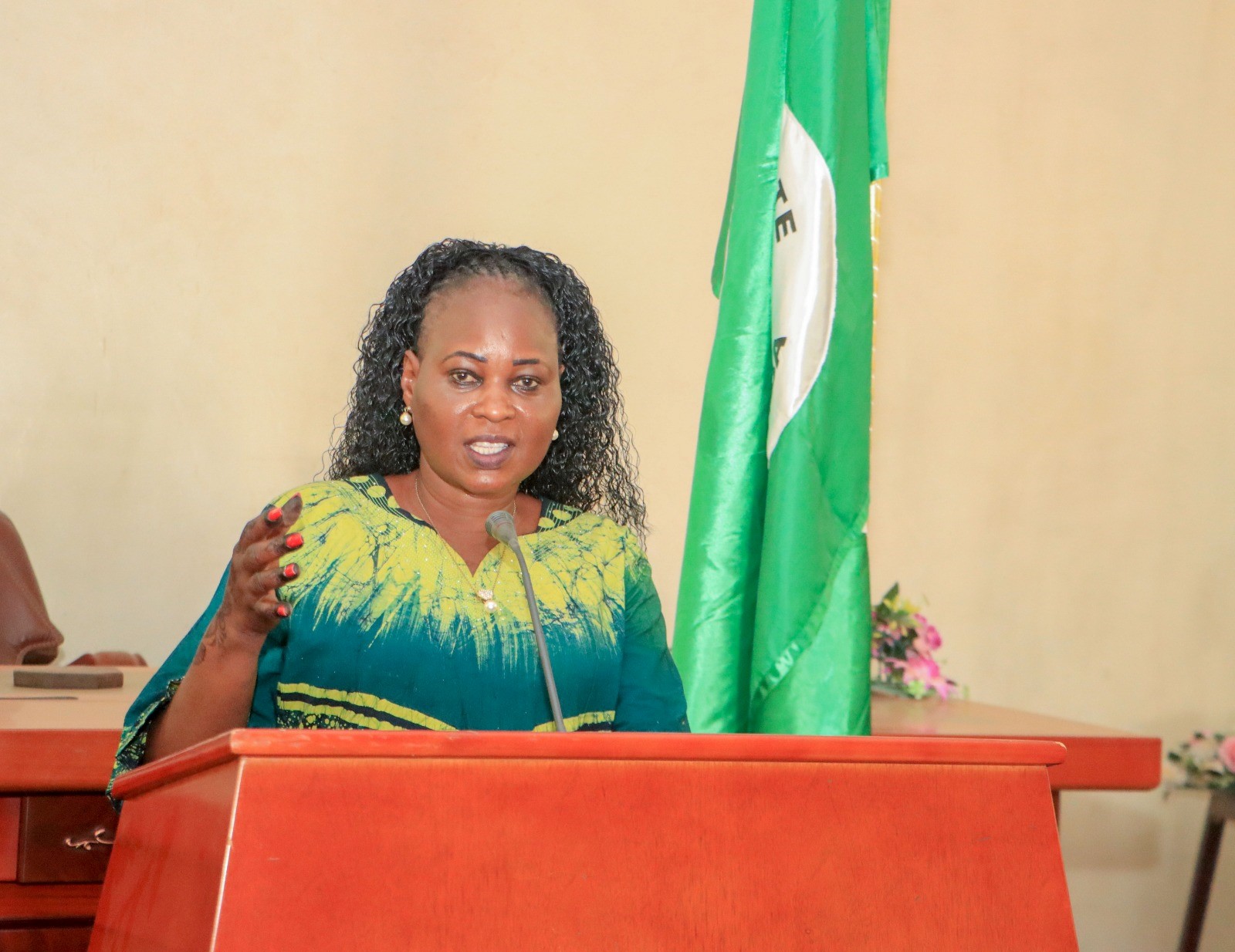
Her Voice, Her Leadership; Women Shaping South Sudan’s Future

Please tell us about yourself
My name is Hon. Betty Poni Christopher. I come from Kajo Keji County, where I serve as the woman representative. Before joining parliament, I worked with Médecins Sans Frontières (MSF) as a nurse. After the Comprehensive Peace Agreement, I served at the county level as the head of Gender and Social Welfare. I joined Central Equatoria State Parliament in 2005, where I served until 2009. During the 2011 referendum, I did not contest for elections but worked with commissions. When the 32 states were created, I was taken to Yei River State and headed the Civil Service Commission. After the states were dissolved back to 10 again, I was appointed to parliament and last year I was appointed Deputy Chairperson for Gender and Social Welfare.
What early experiences or influences shaped your values and desire to serve?
Earlier, I formed and supported women’s groups in my county. At that time, resources were available, and we were able to establish agricultural groups. These experiences inspired me to serve and uplift women in my community.
How did your family, community, or mentors support or challenge your path into leadership?
My family accepted my decision but advised me to consult my husband. When I asked him, he told me, “You are educated, and you can serve in any field you want. The most important thing is respect—respect yourself out there and respect my rules.” Even as an honorable member, I continued doing house chores; cooking, and caring for my children. Whenever I had meetings, I informed him that I would be late.
What personal values guide you in your work and leadership?
I follow the parliamentary code of conduct and the constitution. When I go to the grassroots, I do not place myself above anyone. I respect people, and they respect me in return. These values guide my leadership.
How did your journey into political or public leadership begin?
I began my political journey in 2005, and I have remained in politics to date.
What positions or responsibilities have you held so far in your leadership journey?
In 2005, I was an ordinary member of the Committee on Gender and Social Welfare. Later, I joined the Committee on Security. Together, we worked on the Police Act. My chairperson was Hon. Maring, and I was the one who presented the act in parliament.
What achievements or initiatives are you most proud of?
I am proud of being part of the team that developed the Police Act, which is still in use today.
How has your leadership contributed to your community, especially for women and youth?
We have worked with many NGOs to sensitize youth, conduct training, and organize workshops. Our role is to connect them, while ministries and supporting agencies such as United Nations Development Program (UNDP) implement the programs.
With elections approaching, what role do you see women playing in shaping South Sudan’s political future?
Women are the majority, but due to the economic crisis, many are displaced or living in camps. If they are not brought back, they will not be able to vote from foreign countries. If they return, elections will be peaceful, because women are naturally peacemakers.
Are you planning to contest an elective position, and what motivates you to do so?
Yes. I have been serving in politics since 2005, which is a long time. If I leave politics now, civil servants and NGOs may not accept me. My motivation is to continue serving my people.
What does the 35% women’s quota mean to you personally and politically?
It means women must participate and be trained to take up that 35%. Currently, women are often replaced by men, with the excuse that there are no educated women. Training women will ensure they can claim their rightful share and compete with the remaining 65%.
What challenges have you faced as a woman in politics or leadership, and how have you navigated them?
One major challenge is lobbying. Men often lobby at night, and I cannot attend such meetings, which puts me at a disadvantage. Another challenge is that while women can participate in elections, appointments rarely favor women. As a women’s caucus, we planned to meet the governor to address these issues, and it remains on our agenda.
How would you describe your leadership style?
My leadership style is based on accountability and teamwork. If I am given an assignment, I carry it out to the best of my ability and provide full report.
What makes your leadership approach effective and unique?
I do not rely on rumors. I prefer to see things with my own eyes or hear them directly. I am friendly to everyone, treat people equally, and do not show off.
How do you stay connected to the people you represent?
I stay connected through the commissioner and through the groups I formed back home. I have four groups focused on agriculture and tree planting, which now operate in camps due to displacement. I also connect through phone calls, and during parliamentary recess, I visit them to see how they are doing.
How do you balance leadership responsibilities with personal well-being?
I balance by managing my time. In the morning, I prepare breakfast for my children. Those who attend morning school leave, while the others remain to cook before going to evening school. My older children help with house chores, and my role is to provide money and other necessities.
What is your vision for South Sudan, especially regarding peace, women’s empowerment, and development?
My vision is for women and youth to stand for peace, because we are the peacemakers. We must advocate for peace and empowerment to build a better future.
What message do you have for South Sudanese women and girls who look up to you?
Many young women feel discouraged because politics does not provide immediate financial rewards. My message to them is; you are the future of tomorrow. South Sudan will not remain as it is forever, so do not give up.
What would you like voters to know about you and your leadership values?
I want voters to know that if they elect me, I will address the challenges facing our people, especially insecurity in my hometown, which has not been adequately addressed.
What gives you hope for South Sudan’s future?
South Sudan is not a bad country—it is the leaders who fail to implement the laws. If we respect and enforce the laws, South Sudan will prosper. The peace agreement we have is unique; no other country has such an agreement. It is like ready food—we only need to implement it. I believe the new generation will follow the laws and policies, and South Sudan will have a bright future.
Utilities
“Many young women feel discouraged because politics does not provide immediate financial rewards. My message to them is; you are the future of tomorrow. South Sudan will not remain as it is forever, so do not give up.”- Hon. Betty Poni Christopher