CES, Jonglei States strategize to address herders-farmers conflict
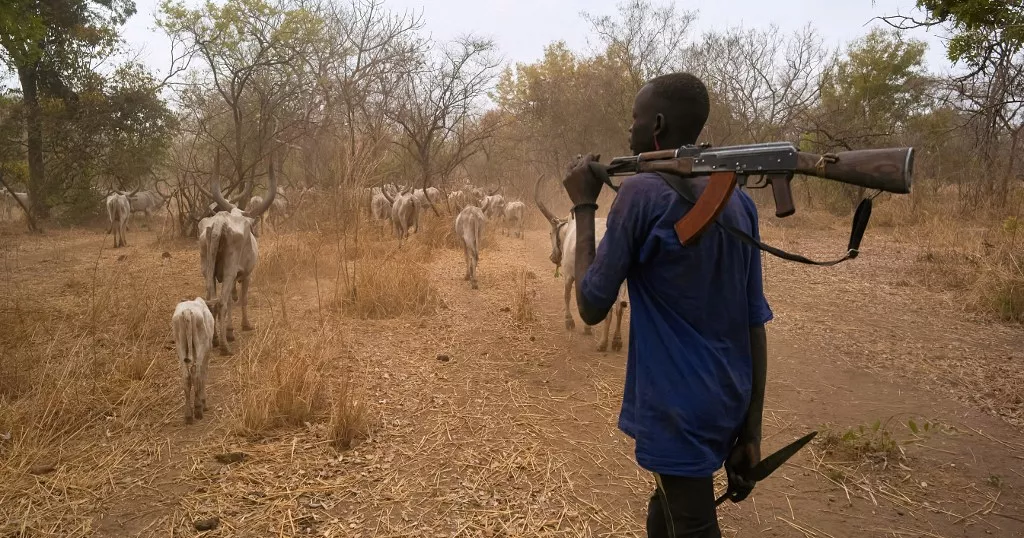
The increased movement of livestock along unusual migratory routes, often leads to violence
By The City Review Editorial
Clashes between farmers and herders have become a prevalent challenge in South Sudan. Both herders and farmers face a rising threat of armed conflict.
While tribal conflicts and cattle raids are not uncommon in South Sudan, the increased movement of livestock along unusual migratory routes in order to flee or avoid violence, particularly agricultural areas, has created tensions with farming communities, often leading to violence.
These dynamics have seriously undermining social stability, including in areas of the country less affected by the wider political conflict that began in December 2013, according to the United Nation’s Food and Agricultural Organization (FAO).
The recent attacks on a cattle camp in Magwi County, Eastern Equatoria State, that claimed the lives of more than 40 people and left communities displaced, is still fresh in the mind.
The Dinka Bor cattle herders were attacked by unknown assailants, causing significant distress among the residents, leading to loss of lives and property and exacerbating tensions in the area.
Commenting on the incident at a press conference in Juba, lawmakers from the Eastern Equatoria State Parliamentary Caucus in the Transitional National Legislative Assembly (TNLA) said the presence of the herders from Jonglei State, and the aftermath of the cattle raid, led to the destruction of farmlands, looting of property, raping of women and girls, the burning of houses and the displacement of civilians in Aru, Amee, Obama, Nyolo, Ayii, Jok Okii, Chomboro, Lowoi, Agoro and Lofiriha in Magwi and Torit counties.
Such is the destruction and conflict that could emanate from the migration of cattle, possible destruction of farmlands and the ultimate conflict between hitherto peacefully coexisting communities if not properly handled.
It is in a bid to address such challenges that the Central Equatoria Governor, Augustino Jadallah, established a committee to oversee the implementation of a 2017 presidential order aimed at returning cattle in the state to their places of origin.
The Governor issued an Order forms State High-Level Ad Hoc Committee with a task of supervising evacuation of cattle camps from various counties in Central Equatoria State.
The decision was announced on Friday through the state broadcast, South Sudan Broadcasting Corporation, in a move that aligns with the resolutions from the 8th Governor’s Forum.
The committee’s responsibilities include coordinating with operational forces to establish procedures for the removal of cattle camps and providing regular progress updates to the state government.
The committee will be chaired by the State Advisor on Peace and Security, with the Minister for Local Government and Law Enforcement Agency serving as deputy chair.
The Minister for Peacebuilding will act as secretary. Other members include representatives from the State Police, the National Security Service Internal Security Bureau Directorate, Military Intelligence, Chieftainship, and the Criminal Investigation Department.
The committee has been formed at a time when there is an influx of cattle camps in Central Equatoria, which has led to tensions between herders and local communities.
Jonglei State Government on cattle repatriation
About two weeks ago, Jonglei State government in collaboration with the International Organization for Migration (IOM) announced a plan to repatriate back home cattle herders from the Equatoria region.
This was resolved in a meeting aimed to provide sustainable peace between the cattle keepers of Jonglei State and farmers of the Equatoria region.
The meeting underscored that the annual cattle migrations, especially from Bor, have increasingly become a flashpoint for conflict with farmers in the Equatoria region.
Jonglei disputes over grazing lands, crop destruction, and access to water resources have fuelled tensions, threatening the fragile peace in most parts of the equatorial region.
The meeting chaired by former Jonglei State Deputy Governor Atong Kuol Manyang Juuk brought together national members of parliament, members of the State legislative assembly, traditional chiefs, cattle camps leaders, youth leaders, among others.
“The path to sustainable peace requires a collective effort from all stakeholders. The government, civil society organizations, international partners, and, most importantly, the herders and farmers themselves must work together to implement these solutions,” she said.
She added that the repatriation of the pastoralists to the state would help in improving the security in the state.
Meanwhile, various pastoralists have occasionally convened for the cattle migration conferences to discuss peaceful coexistence and address the potential conflicts.
In March 2023, for instance, Sudanese pastoralists and South Sudanese farmers concluded a cattle migration conference in Aweil town in South Sudan’s Northern Bahr el Ghazal State.
“The main recommendation is that the Rizeigat representatives remain behind to see whether there are outstanding issues like blood compensations, debts, robberies and other problems. We will solve those things peacefully,” Dut Majak, a Dinka Malual chief representing Aweil North and Aweil West counties, told Radio Tamazuj.